Understanding Emotionally Based School Avoidance (EBSA)
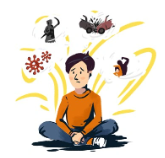 Emotionally Based School Avoidance (EBSA) is a term used to describe young people who experience significant difficulty attending school due to emotional or mental health needs. This may include anxiety, fear, low mood, or feeling overwhelmed by aspects of school life. EBSA is different from truancy or deliberate refusal due to lack of motivation; most students experiencing EBSA want to attend school but feel unable to cope with the emotional demands of being here.
EBSA can develop gradually over time or be triggered by a specific event such as friendship difficulties, a simple event like forgetting their homework, being put on the spot in a lesson, or changes at home. Early identification and support from parents, schools and the GP can make a significant difference in helping young people feel safe, supported and able to re-engage with education.
What EBSA can look like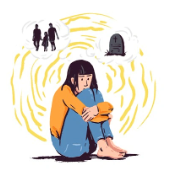
Every young person’s experience is different, but common signs may include:
-
Strong anxiety or distress linked to school
-
Reluctance to get ready for school, particularly on weekday mornings
-
Physical complaints such as headaches, stomach aches, nausea or tiredness
-
Changes in behaviour, mood swings, anger or withdrawal
-
Avoiding certain days with certain lessons, or social situations
-
Difficulty sleeping, especially on Sunday evenings
What parents and carers can do
If you notice a pattern developing, it is important to seek support early. Working in partnership with school is one of the most effective ways to support a child. Small, gradual steps can help rebuild confidence and reduce anxiety. Below are some of the tools we have available in school to support young people who start to struggle with their attendance.
A collaborative, compassionate approach between home and school can help young people feel safe and reduce pressure while rebuilding attendance.
If you are worried about your child’s attendance or wellbeing, please contact the school as soon as possible so we can work together to support them. You can contact the school via your child's tutor, their Head of Year or via the safeguarding@ringwood.hants.sch.uk email inbox.
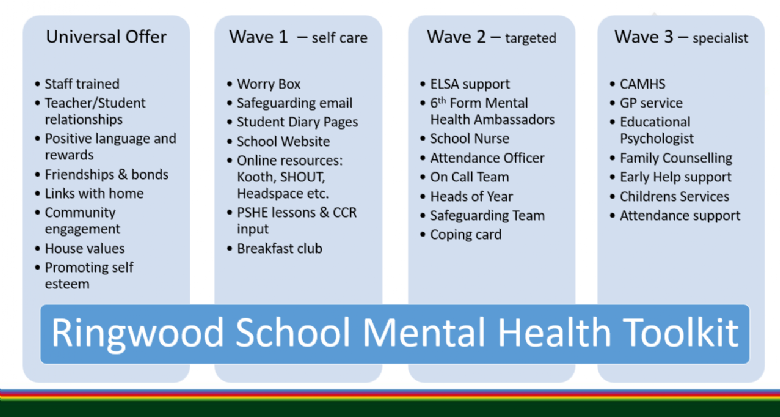
When to involve a GP
If anxiety, low mood, panic symptoms or physical complaints are becoming frequent, a GP can provide additional support. A GP may:
-
Explore underlying anxiety or mental health needs
-
Offer advice and reassurance
-
Signpost to local mental health services or counselling
-
Consider referrals to specialist support where appropriate
Working together — family, school and health professionals — creates a strong support network around the young person.